
Clinical Access Strategy and Coordinated Care Entry
Evaluating the Effectiveness of Remote Triage in Healthcare begins with one question: does it truly improve care access and clinical direction? Healthcare organizations increasingly rely on structured services that guide patients before in-person visits. Because demand continues to rise, providers need systems that assess urgency accurately and safely.
Care Agent BPO supports healthcare partners by delivering structured remote coordination that prioritizes clarity and speed. Rather than leaving patients uncertain, triage professionals apply standardized protocols that help determine next steps. As a result, individuals receive timely direction, and providers reduce unnecessary congestion.
Remote triage strengthens decision making at the first contact point. When supported by trained clinical teams, patients receive guidance that aligns with symptom severity. Therefore, resources shift toward those who require urgent attention. Meanwhile, routine concerns receive proper routing without overwhelming facilities.
A modern Medical call Center model plays a key role in this process. Through organized intake and symptom review, triage teams gather essential information quickly. Because early assessment shapes outcomes, accurate documentation supports continuity across providers.
The effectiveness of remote triage also depends on patient trust. Clear communication builds confidence in recommendations. When patients understand next steps, compliance improves.
Healthcare systems must remain efficient and safe. Consequently, structured triage channels reduce delays while protecting quality. Over time, coordinated entry processes strengthen system reliability.
Remote triage does not replace clinical care. Instead, it refines access and directs patients toward the right care level.
Tele Triage Protocols and Decision Accuracy Metrics
Structured Tele Triage programs rely on evidence based clinical guidelines. These guidelines standardize symptom assessment and escalation procedures. Therefore, variation decreases and safety improves.
Studies examining remote triage show high rates of issue resolution without in-person visits. However, success depends on accurate documentation and adherence to protocols. When professionals follow defined scripts and escalation thresholds, risk decreases.
A well organized health care call center strengthens triage accuracy. Call routing ensures patients reach trained specialists. Because first impressions influence trust, timely response remains essential.
Remote triage also supports better allocation of emergency resources. Non-urgent cases shift away from emergency departments. As a result, providers focus on critical patients.
Documentation remains central to quality assurance. Supervisors review interactions and monitor adherence to guidelines. Consequently, teams identify patterns and refine training.
Accuracy does not rely on technology alone. It requires skilled professionals who interpret symptoms carefully. Therefore, continuous education supports sustained performance.
Effective triage models measure resolution rates, referral patterns, and patient satisfaction. These metrics provide insight into operational strength.
Ultimately, structured triage protocols enhance access while maintaining clinical responsibility. When combined with oversight and training, remote triage demonstrates measurable effectiveness.
Remote Patient Monitoring and Care Continuity Impact
The integration of RPM-HT: Remote Patient Monitoring expands the value of remote triage. While triage directs immediate care decisions, monitoring tracks ongoing health data. Therefore, providers receive continuous insight beyond a single call interaction.
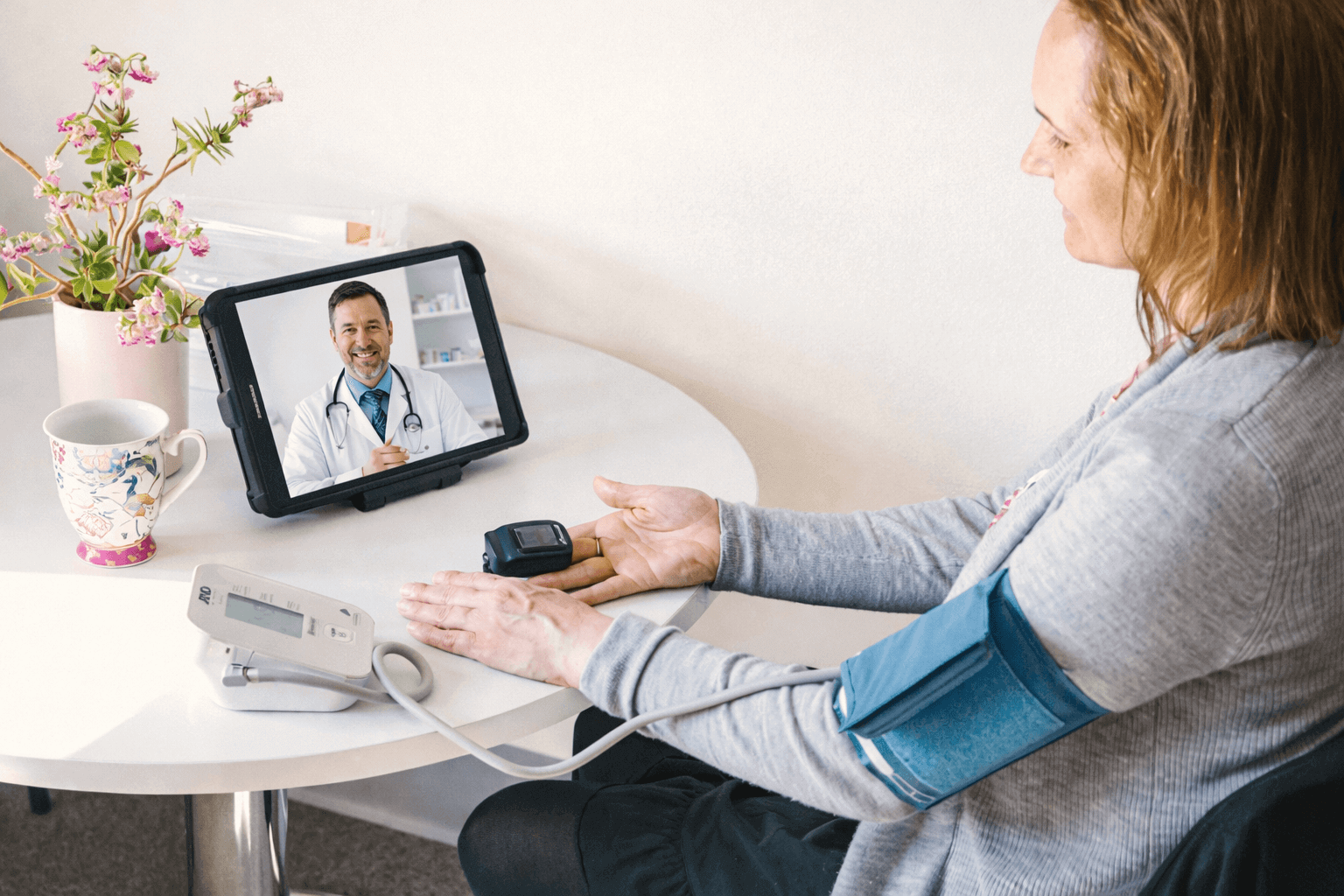
Monitoring devices capture vital signs and symptom trends. When data signals potential complications, teams respond promptly. Consequently, early intervention reduces avoidable hospital visits.
This connection strengthens broader Healthcare Operations. Instead of fragmented information, providers access centralized patient updates. Because visibility improves, care coordination becomes smoother.
Remote monitoring also supports chronic disease management. Patients feel reassured knowing clinical oversight remains active. As a result, adherence improves and complications decline.
Care Agent BPO integrates monitoring insights into triage workflows. When alerts arise, trained professionals assess context and escalate appropriately. This coordinated approach reinforces safety.
Operational efficiency increases as well. Rather than reacting to emergencies, teams identify issues earlier. Therefore, preventive strategies replace crisis management.
Continuity of care strengthens patient relationships. Monitoring combined with triage reduces uncertainty and builds confidence.
The effectiveness of remote triage expands when paired with structured monitoring. Together, they support proactive healthcare delivery and measurable clinical improvement.
Patient Safety Benchmarks and System Performance Indicators
Evaluating effectiveness requires measurable benchmarks. Resolution rates, referral accuracy, and patient feedback offer insight into performance. Therefore, organizations rely on structured evaluation methods.
A strong remote triage program aligns with broader Healthcare objectives such as safety and access. When triage directs patients appropriately, system strain decreases. Consequently, emergency departments experience reduced congestion.
Quality assurance teams review call recordings and documentation for compliance. This oversight reinforces accountability. Because monitoring occurs consistently, performance remains stable.
Risk mitigation plays a major role in triage evaluation. Clear escalation rules prevent under-triaging. At the same time, proper documentation reduces liability exposure.
Remote triage also influences administrative workflows. Efficient coordination lowers delays that might otherwise lead to claim complications. Although triage focuses on clinical access, it indirectly supports smoother Claims handling through improved documentation.

Patient satisfaction surveys provide another layer of measurement. Clear guidance and respectful communication improve experience scores.
Healthcare leaders value reliability. Therefore, performance indicators guide improvement initiatives.
Effectiveness emerges through structured oversight, defined metrics, and skilled professionals. When systems measure results consistently, remote triage becomes a dependable access solution.
Strategic Healthcare Partnership and Next Steps
Remote triage continues to shape modern care access. However, its success depends on operational discipline and experienced support. Care Agent BPO delivers scalable coordination models tailored to healthcare providers.
Through organized Medical Support Services, organizations strengthen patient intake, escalation management, and monitoring integration. Therefore, triage becomes part of a comprehensive strategy rather than an isolated function.
Partnership also enhances adaptability. As demand fluctuates, trained teams adjust quickly. Because healthcare environments evolve rapidly, flexibility ensures continuity.
Care Agent BPO combines clinical coordination expertise with structured oversight. This approach aligns with industry expectations and regulatory standards.
Healthcare organizations seeking stronger access control and improved triage outcomes benefit from collaborative execution. Rather than reactive management, proactive systems protect both patients and providers.
If your organization aims to refine access channels and strengthen patient routing, consider a strategic conversation about scalable remote coordination. Strength begins with preparedness and informed direction.